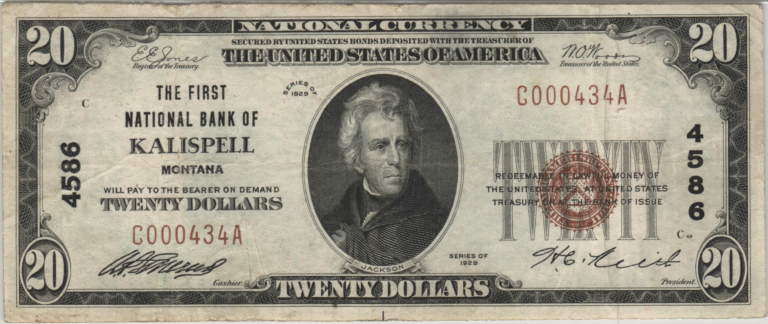
When Utah joined the Union in 1896, its communities had already been part of the national banknote narrative for over two decades. National banks in Utah began issuing currency under the National Bank Act starting in 1872, creating tangible links between the state’s rugged frontier economy and the broader financial system of the United States.
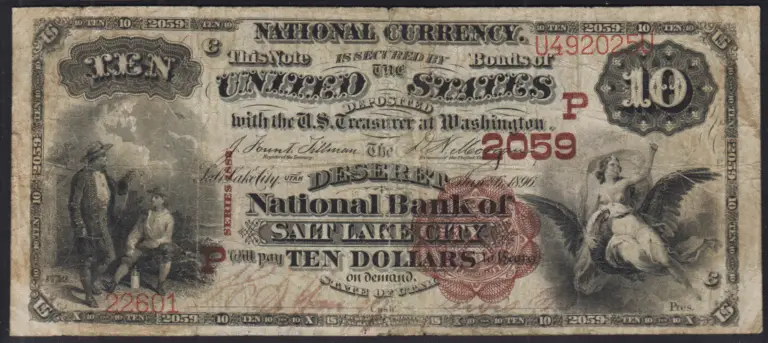
Utah’s first national banknotes came from institutions like the Deseret National Bank of Salt Lake City—chartered in 1872 and one of the earliest in the West. These banks operated against a backdrop of mining booms, railroad expansions, and waves of migration. The notes they issued were not just instruments of commerce but reflections of local identity: adorned with bank titles, charter numbers, and sometimes even the signatures of prominent citizens.
Most Utah notes fall into the Third Charter Period (1882–1929), including brown backs, red seals, and blue seals. Their relatively low population—fewer than 200 surviving large-size notes across all Utah issuers—makes them a prized segment in numismatic circles. Some banks, such as the First National Bank of Ogden and the National Bank of the Republic in Salt Lake City, issued distinctive series that showcase the artistry and printing techniques of the era.
Each banknote tells a story: of settlement, speculation, civic pride, and at times, economic hardship. Preserving these notes allows us to better understand how Utahans connected to a growing nation—not just through geography, but through trust in currency backed by local enterprise and federal oversight.
Our team of experts will look over your note and answer any questions you may have.